Photographing the Mardi Gras Indians at The New Orleans Jazz and Heritage Festival
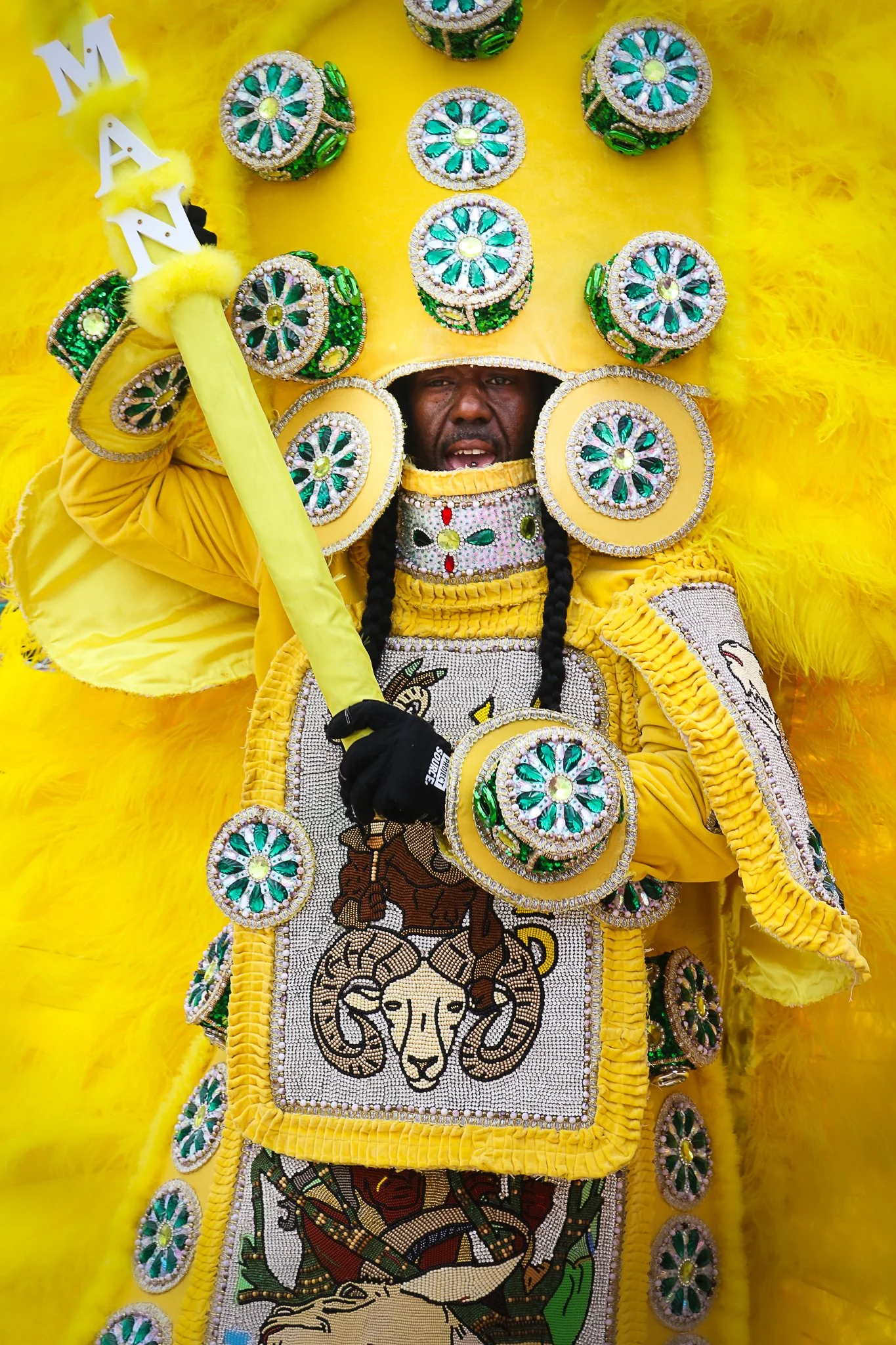
A Wild Man from the Golden Comanche Tribe; A Wild Man is the person who clears the path for the rest of the tribe.
This April I had the privilege of attending the New Orleans Jazz & Heritage Festival—Jazz Fest—and scored one of those rare, magic photo moments: shooting the New Orleans Mardi Gras Indians. Photographing them can be tricky culturally and logistically. On Mardi Gras day the Indians operate with a semi-secret tradition—costumes, locations, and timing are guarded—so photographing them is generally a no-no. Jazz Fest relaxes some of those rules, but the opportunity still felt special and delicate.
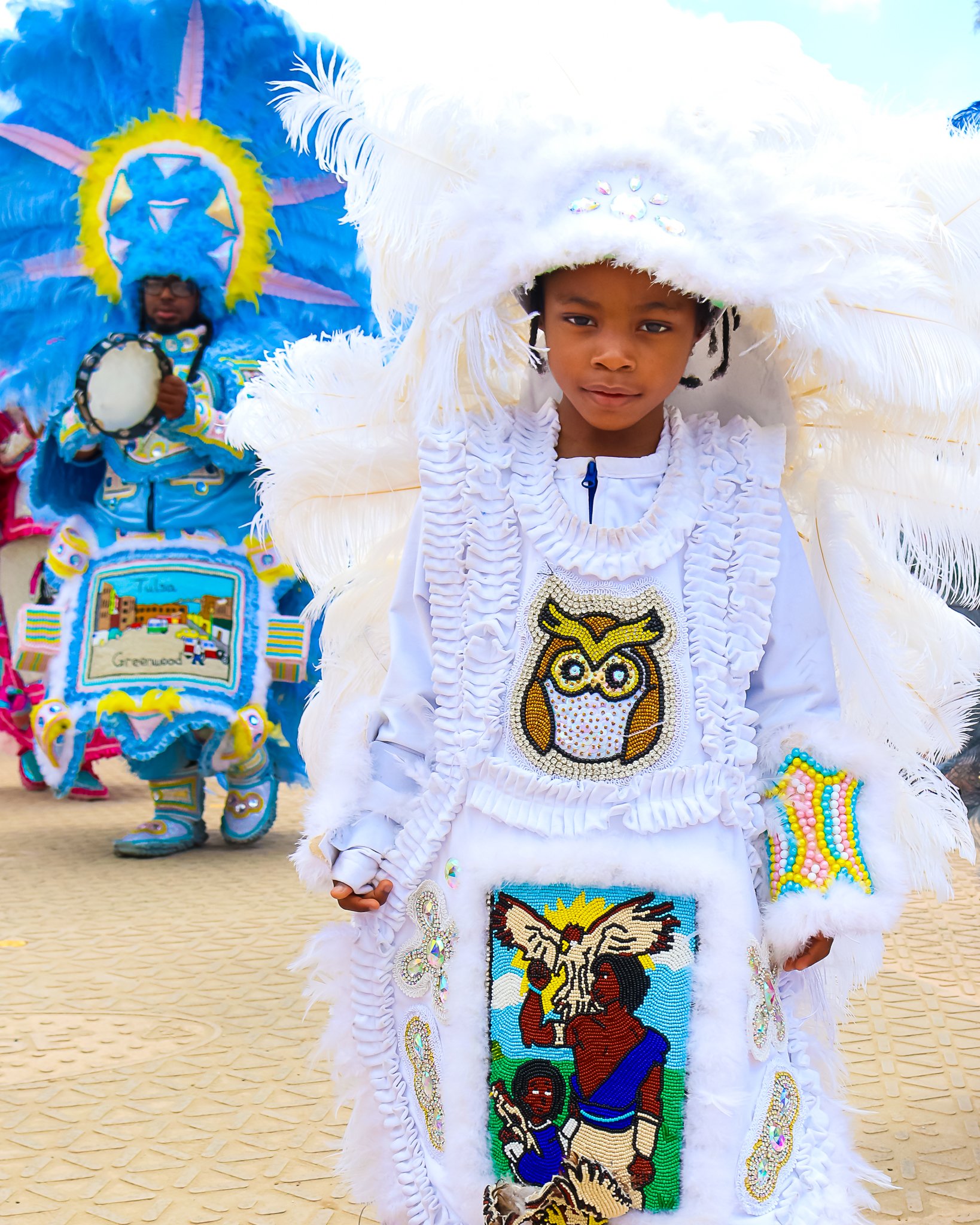
I wasn’t exactly set up for it. I was shooting with my mother’s Canon 80D, a body I hadn’t used much before, and the light was brutally bright—midday contrast that threatens highlight detail and casts harsh shadows. Add thousands of festival-goers vying for the same shots, a fast-moving group, and distracting signage and beer ads everywhere, and you’ve got a challenging scene.
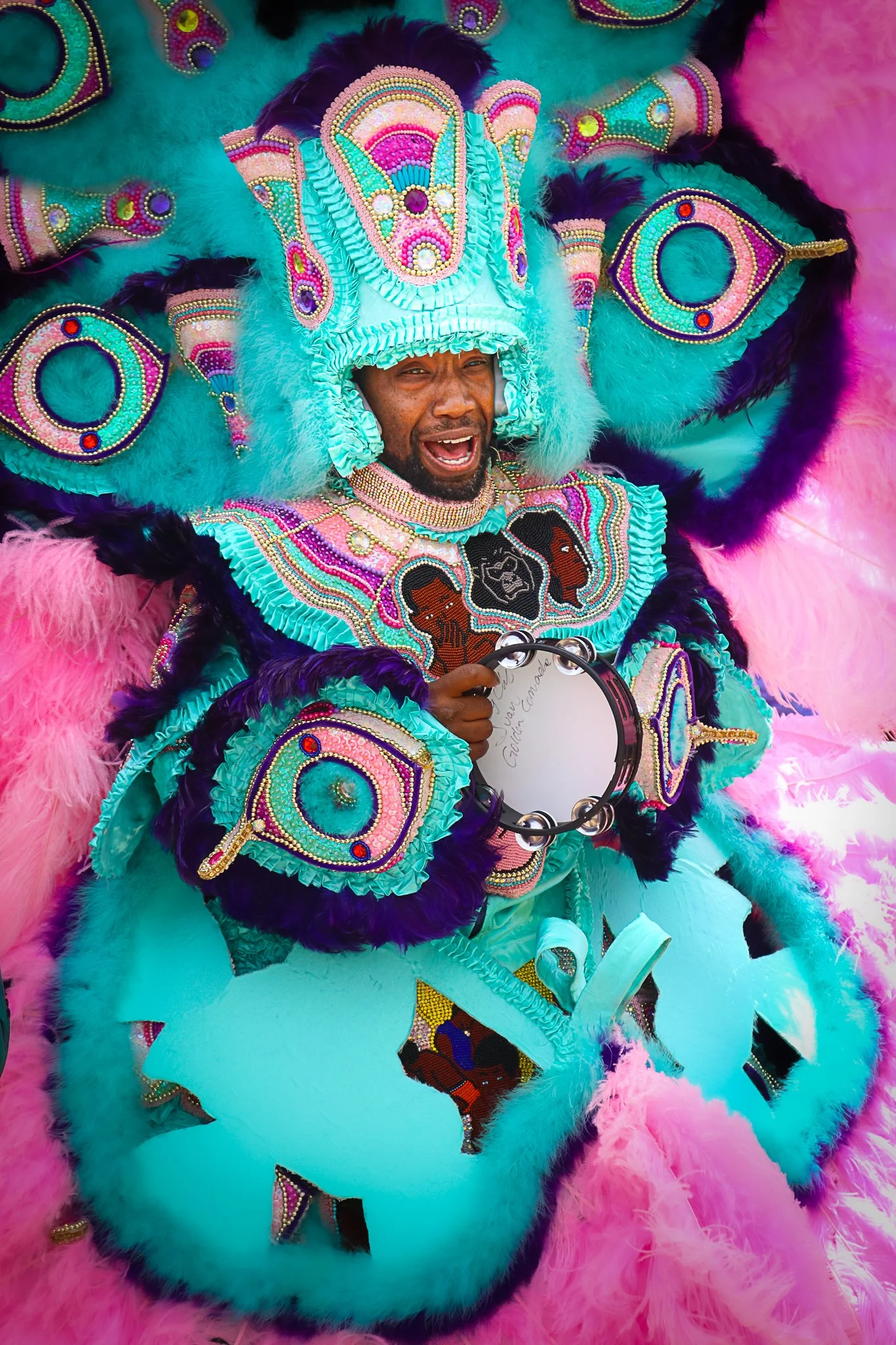
What saved the session was timing and positioning. I happened to be standing behind the stage watching Los Skarnales when the Indians were assembling behind me. They paused to prepare before marching, and that pause let me get in close and compose. I got my best frames right before they started moving and attracting the crowd—being in the right place at the right time.
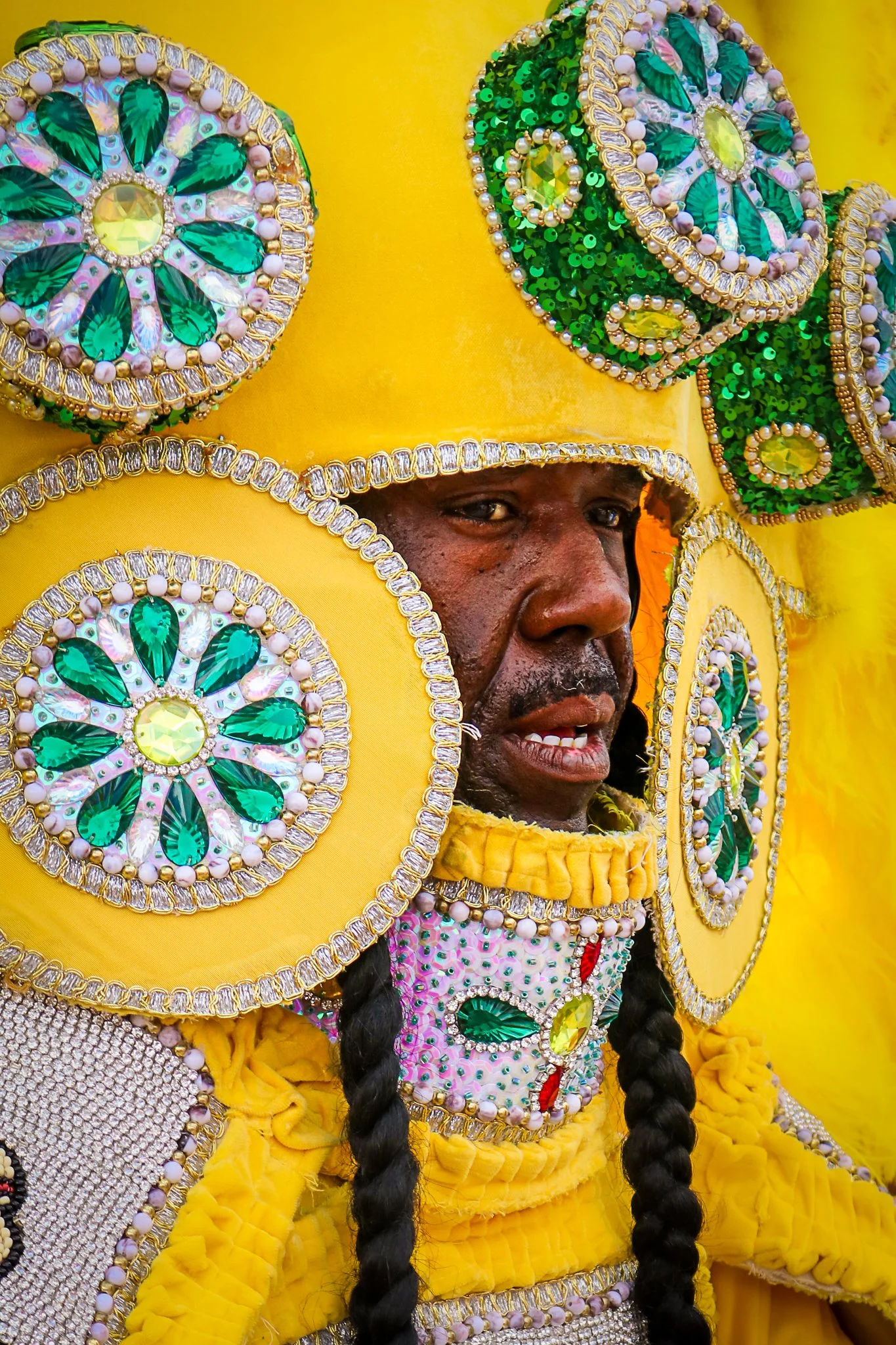
My primary compositional strategy was “fill the frame.” The Indians’ suits are dense with color, texture, and detail, so getting in tight let me showcase the beadwork, feathers, and hand-stitched motifs while eliminating most of the chaotic background. Filling the frame also helped the images read clearly at large sizes—important when you want to print.
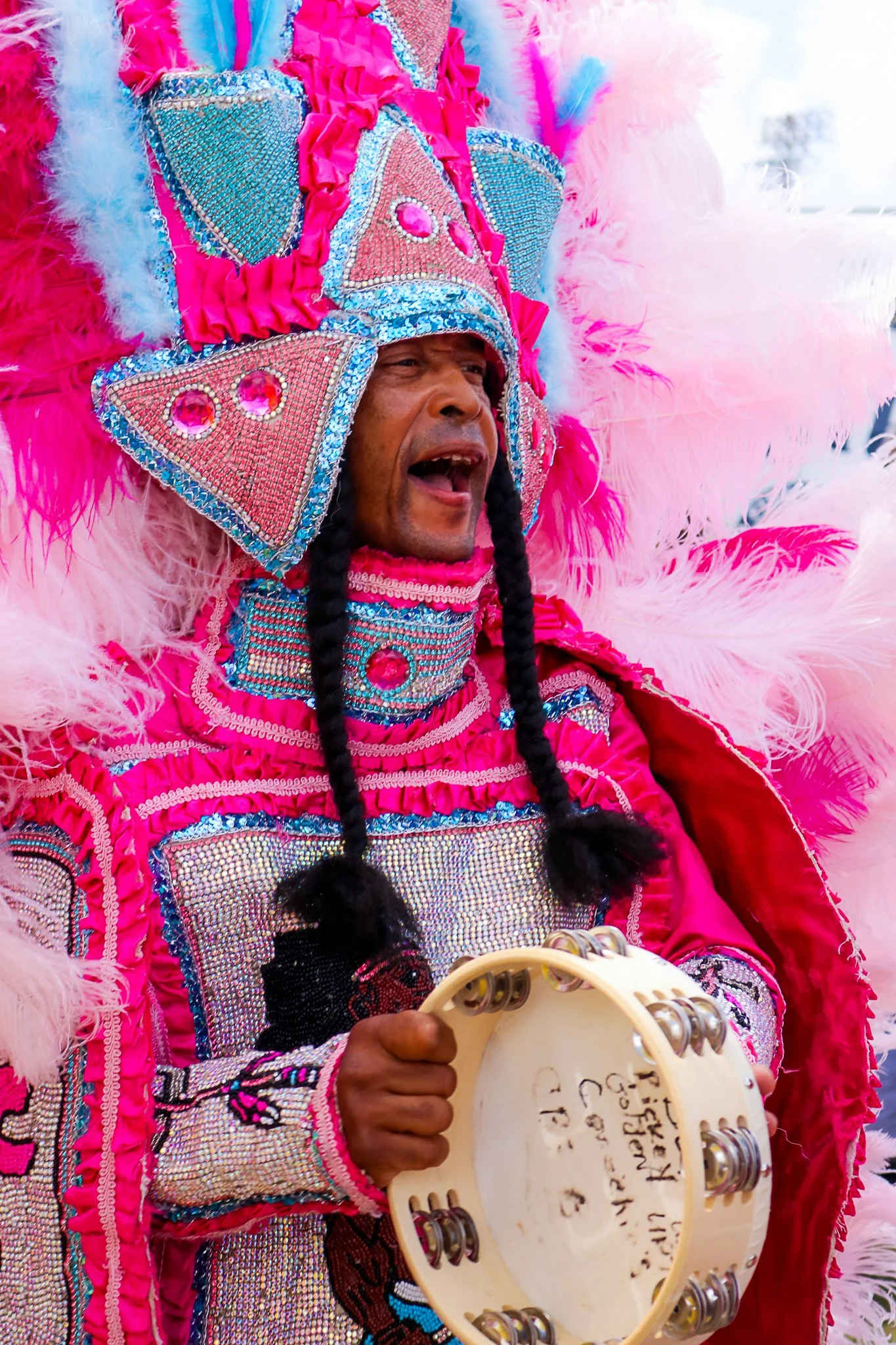
Post-processing was minimal but deliberate. I nudged saturation slightly to reflect how vibrant the suits felt in person, and selectively raised exposure on some faces that fell into shadow from the bright overhead light. I avoided heavy clarity or HDR-style processing to keep the textiles looking natural. Cropping tight where needed removed beer signage and background clutter without losing context. In one photo I had to edit out, what we affectionately call Love Bugs, which were everywhere!
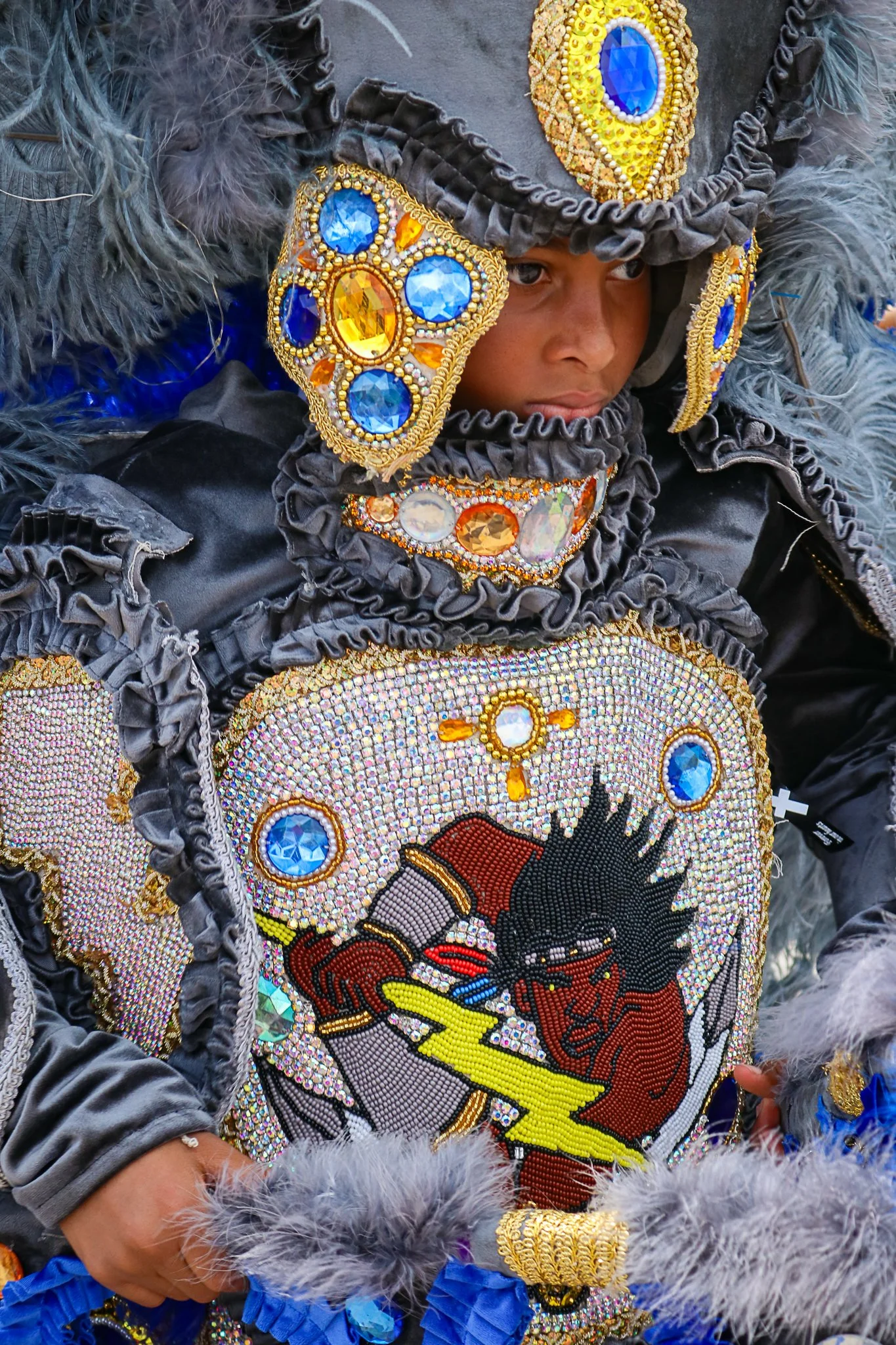
The result felt worth the effort. These photos came together almost by accident, but because of that mix of preparedness and luck they capture a rare, intimate view of an important cultural tradition. I was so pleased with the result I ordered my first large-format print of one of the shots—seeing the beadwork and feather detail at scale felt like a small way to honor the craft and the moment.
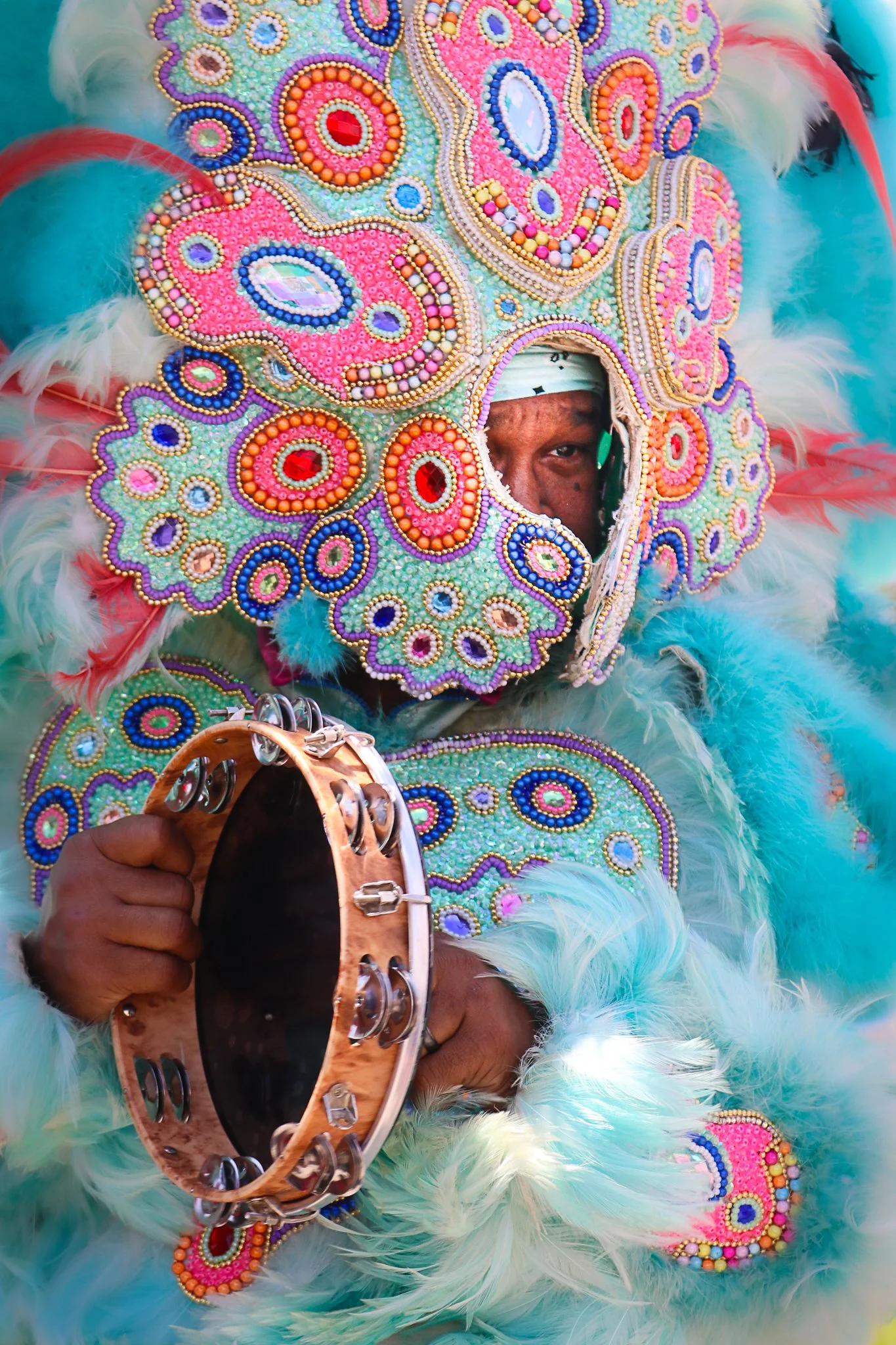
I ordered a 20×30 inch print of this photo, I’m very excited to see how it turns out!
If you’re shooting similar festival scenes: learn your camera (or at least know its basic settings), position yourself where performers pause, use fill-the-frame to isolate subjects from busy backgrounds, and be culturally mindful about photographing sensitive traditions. A respectful, patient approach often yields the best images—and the best memories.
